

-
Behaviour As Impulse

I will start with a question. What is impulsive behaviour, friends? Acting without thinking. The idea of doing without thinking meaning an absence of brain function? Yes, at that moment absent of brain function. Doing something quickly without thinking in advance. Could be just something learned like driving. We don’t think much to know how…
-
Source Impulse
On the subject of impulse, there is a difference between the impulses of the mind and compulsive behaviour. Eating when you are hungry is an impulse. Eating cookies because you are depressed is compulsive behaviour. One or two cookies is ok, but most don’t stop at two. One or two cookies is just fine. The…
-
Choice Not Understood
I don’t attend church because of my inappropriate urges to giggle and sometimes laugh out loud. An impulse I cannot seem to control in that environment. Hence my nonparticipation in things sometimes. You shouldn’t be cracking up during solemn events. Indeed. Some interpret that as a lack of empathy or sensitivity, or even as evidence…
-
Pantheon of Gods

Looked at in the spiritual / metaphysical / magical sense, impulses can all be called spirits. They have been depicted in countless ways across human cultures, even showing up in alchemy as abstract principles rather that intelligent agencies. Showing up in early medicine and even in more contemporary models like the Japanese association of personalities…
-
Animal Brain
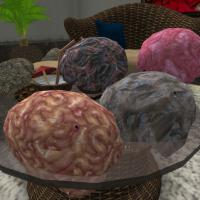
It’s established that the hindbrain has the ability to override any voluntary higher functions. Your reptilian and mammalian brains can shut your “thinking” brain off, but it does this when the information presented to it is too contradictory for it to feel secure about it. Your animal brain isn’t afraid of violence. It isn’t afraid…
-
Awareness Is Available
I think knowing about our internal conflicts will really be helpful. They do show up externally in automatic behaviours. Don’t dismiss your accidents. Many of them are not accidental. Thinking of them as different entities and listening to them rather than ignoring the one I’m not following. I do that myself and find that it helps. But…
Category: Impulse
We distinguish between our thought, our behaviours and our impulsive behaviours, our conscious behaviours and our subconscious, but in fact no real division exists. All of our behaviours are ultimately impulsive. Every behaviour we have at any moment, and every idea and experience we have ever had, are present at all times. This is why even our strangest behaviours, those that seem the most self destructive, remain remarkably consistent despite any effort at rational thought to control them. Some behaviours are so hard wired and impulsive that we don’t even have to learn the concrete components of them to be driven to act on them.
When we understand our behaviours as impulses rather than the dramatic blurbs of our emotion/memories, we can then look at how each behaviour shows up and see how they flow together naturally. Impulses are all life affirmative. It’s the conflicts we set up regarding our impulses that turn them into self destructive behaviours.
“I don’t believe in guilt, I believe in living on impulse as long as you never intentionally hurt another person, and don’t judge people in your life. I think you should live completely free.” Angelina Jolie (American Actress, b.1975)
“Impulse without reason is not enough, and reason without impulse is a poor makeshift.” William James (American Philosopher and Psychologist, 1842-1910)