

-
Shinto Views

To begin, Shintoism is not a religion, and yet it is. It’s the native belief system of Japan, and still in a sense very much alive and well, but it doesn’t identify itself as a body. Shintoism focuses on this life. They aren’t concerned with teachings to earn your way into an afterlife. Their rites…
-
Shinto Harmony
Shintoism is very concerned with purity, but this purity is not the moral concept we think of. They believe that by doing, or being associated with disharmonious things, you pick up a spiritual stain. You aren’t a bad person, nor will you necessarily be damned, but it is seen to be in your best interests…
-
Druid View
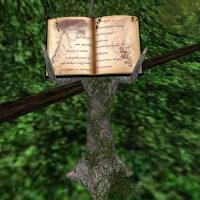
Druidism both is, and isn’t, a religion. It originated in a culture that didn’t originally have the Roman Catholic view of religion. It‘s perhaps more accurate to say it’s a wisdom tradition, sort of like a western Taoism. Shamanistic? Yes, in a sense, but not as strictly grounded as that. They had a long standing,…
-
Druid Paths
Sort of like Indian mysticism, the Druid recognized that spirituality isn’t a single path. They acknowledged three. The Druid as we know the word, who was the keeper of observances and the village Sage. The Ovate who was more like the Native American Shaman, seeker of spirits and signs, and psychopomp or spirit guide to…
-
Natural Magic
The Druids tended to live outside of tribal holdings, and not in the walled villages. Bards tended to live in them, but move from one village to another, and Ovates tended to live in places of power, but not natural power per se. Druids lived near their sacred groves. In border spots like caves, Ovates…
-
Druid Practice
-
Druid Creed
It’s hard to say much that’s absolute about Druid creed, because as part of their creed they were not absolutist thinkers. The culture the Druids would be most like is the Magi, and they would often later be called Magi in Latin records of them. They were rationalists, but not materialists. Before the advent of…
-
Return to the Garden
The Druids were not a dogmatic people, and it would be entirely reasonable if you see gnosis in nature, to adopt the Druid name. You would not dishonour the ancestors having no static doctrine and gaining wisdom from observances of nature, and keeping of human history. To declare yourself a Druid is merely to say…
-
Respect Death
Those into what can perhaps most broadly be called “necromantic” practices, are not at odds with Druid thinking. Mediumship, or communing with the dead, and giving the dead place and respect were quite acceptable. Mediumship would have been undertaken by the Ovates. In our modern technological age, not only do we not adequately respect life,…
-
Sikhism
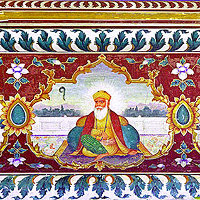
Sikhism is a religion that started at about the same time as the Protestant movement did in Catholicism. It takes influences both from Islam and Hinduism, and it’s original lineage was preserved by a short lineage of Gurus before it was encoded in their religious text. Please forgive my lack of mastery of the language, but…
-
Truth in All Things
-
Stoic Morality
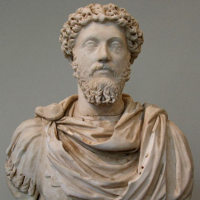
In Stoic philosophy the way of a reasonable life is foremost, and they value universal reason over human reason. They say that poor moral conduct is an error of ignorance, but they don’t define morality in a religious sense. They do have a sort of dualistic view of the world, but it isn’t materialistic. They…
-
Alive and Active
Stoicism is a school of philosophy from ancient Greece, and it is not fully understood in modern thinking today. In the age of the Greek philosophical schools, they weren’t just a belief system. They were a way of life, and philosophers were very serious people like our scientists today. Science even started with them, and it…
-
Stoic Fate
There is a missing element that modern Stoics don’t usually embrace. The Hegemon, or logos, is still alive and aware in the world. The world is itself possessed of intelligence in the original Stoic view. They saw life as a constant dialogue, a “debate” if you will, with that intelligence. They did believe in adhering…
-
Stoic Practice
Stoicism did have ‘enlightened’ Stoics. The goal of a Stoic was to become a Sage. A Sage was someone who sees reality clearly, and is troubled by nothing. He is thus empowered to impart this knowledge to others, as well as always being able to take the right action. They did in a sense have monks who engaged…
-
Classical Cynicism
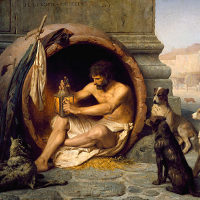
I am not talking about being grouchy, but classical cynicism which is a life philosophy. It’s a philosophy that does have its roots in the teachings of Socrates, and if anything focused on putting them into very literal action. Cynics believed that virtue was sufficient for a happy life, and virtue was in evidence in what…
-
Critics of Institution
-
Land and God

Zionism is both political and spiritual. It has been going on for a long time, and it even translated into other cultures. In America, it became manifest destiny. Zionism is ultimately the idea that God has promised land, and that it’s ones sacred duty to either take it or preserve it. The belief in an…
Category: World Belief
On my spiritual path I have studied many world beliefs. While I don’t claim to be an authority on them, I will share some of what I’ve learned in the ‘World Beliefs’ category. Perhaps they will inspire you to seek further.
Those who abandon their faith are not faithless. Perhaps quite to the contrary, their faith has given them the strength to abandon trappings. Religion from the Latin religio meaning practice. We will all have practices. I was very devout myself, and in my devotion I found I could no longer devote myself to that creed. My faith isn’t weak. It motivates my seeking. I don’t subscribe to any specific faith. I find truth in my personal experience which does loosely label me a Gnostic. Many Gnostic schools say the logos indwells our sun itself.
The Buddhas wisdom was put into the context of the greater way as was the only way it could be, but in fact the symbolism is at best intuitively true. The spheres exist within us. Wisdom is simple. It is the sign of true knowing. Not if they can spout arcane jargon, but can they take an arcane topic and make it abundantly clear to the uninitiated.
I will state that these beliefs discussed are not necessarily my beliefs.
“There is not enough religion in the world to destroy the world’s religious.” Friedrich Nietzsche