

-
Cousin of Magic

We have all heard a great deal about magic as it’s a very popular topic these days, at least in some circles. Theurgy is a cousin of magic and there has been a love hate relationship between the two schools of thought and practice for a very long time. It comes down to this. They…
-
Walking In Gods Footsteps
Buddhism is very theurgic (although without the God) with their focus on Nirvana and other gifts in the practice are secondary. Yes, and theurgy is just the pursuit of an acknowledged divine or spiritual work. It doesn’t require a deity for a focus in an absolute sense. In fact, Brahminical spirituality had elements of non-theological…
-
Original Battle Of The Sexes
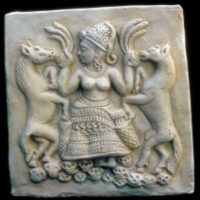
Shall we start with a forgotten divinity to illustrate theurgic practice? Now much of this is very unpopular with Christians. It could even move them to violence, but it’s a combination of a Gnostic survival and anthropological and archeological research. The modern God Yahweh, also known as Jehovah, has a feminine counterpart, and there are…
-
Worship Of Asherah
I saw an article about Asherah being God’s wife. Asherah should not have been neglected. I guess they thought they were serving stability, and in the process they sacrificed what little sanity they had. I was wondering why they would take her out? She fomented questioning and possible defiance. She got in the way of…
-
Path Of Gods
Shall we conclude the history lesson and get down to theurgic practice? Specifically referencing Asherah, as only bits and pieces of her wisdom are preserved in the original Judaic form, you would need to adopt them from another cultures that also venerated her, and theurgy doesn’t require sticking strictly to cannon either. Christian Gnosticism mostly…
-
Closer to God
What if theurgy sounds appealing to you, but you don’t believe in Gods in the literal sense? Well, the original observations about the Gods were made on what we would consider an irrational but otherwise objective sense. They believed that the events they saw happening in the world, and the things that recur in reality,…
-
Eros is Passion
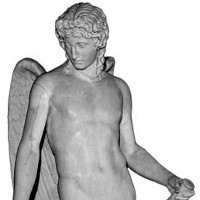
Today we are talking about Eros. In English, we have only the one word, love, but in Greek they have four words for love. We will be talking about only one of these. Eros could be described as passionate love. It does have links to sexuality, but isn’t limited to it. May I ask, what…
-
Messenger Between
Eros in Greek mythology was a messenger between the gods and humanity inspiring more than sexual desire. But Eros did not have the broad scope of perception that the gods had (not actually being a god), and his actions often lead to complications for the mortals involved. Eros unintentionally led some people to pathos or…
-
Rooted in the Passions
People look at the natural world, the plants and animals, and describe their ways as base, crass, even brutal. They think that art and truth and other aspects of beauty are somehow foreign to the natural world. We have these potentials within us because they stem from a potential that already existed in the world,…
-
Play Pretend to Find Reality
How many people do you know in your lives who seem very passionate about anything at all? I know many that do. Role playing brings out the passion to create. Do they all create the same things? People that are shy can open up to their hearts more I think. Yes. It becomes safe because it’s…
-
Invoke Eros
So Eros, what should we do with it? Invoke it? Yes. Centre in it. Live for the love of life itself. But don’t go kissing cops like in that “Love Potion Number 9” song. True, and that itself isn’t Eros. That is just foolishness. Eros without intoxication has wisdom to it. Are there such things as love…
-
Speak to His Heart
Eros and logos, passion and reason, should be married in the psyche, in the mind. Mind unrooted in passion can justify hideous behaviour as being logical. Passion unconnected to reason lacks any expressive power, and thus loses its transformative potential. The Gorgon is the avatar of the venomous quality of reason. Once bitten by a cold line…
-
Need for Catharsis
You have Eros for your writing, passionate love, an intimate relationship with it. It is a part of you, no? Yes, it is. One can have Eros for their relationship or for a special class of experience. They can have it for a hobby though those usually need to be freed even more than they…
-
Embodiments of Pure Emotion
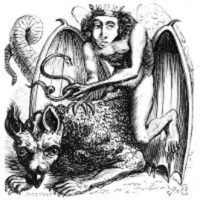
We are talking about Asteroth. Asteroth is a demon. Is this safe territory to go into? What would you, my friends, say that “gods” are? Any answer is a legitimate answer. Beings more powerful than humans who wish to be worshipped? Benevolent comes to mind but the Old Testament counters that. Omni-powerful? Beings outside our reality.…
-
Asteroth Corruption
In human conscious- ness there has been some serious ambiguity. Humanity has been maturing very slowly as seen from a human point of view. One of the inner conflicts is the issue of who is actually the bearer of the gift of life. In older pagan cultures, females were widely regarded as the source of…
-
Source in Astarte
Asteroth has his source in Astarte. Astarte was Asheras more aggressive twin, a goddess of fertility and war. Female? Yes. Astarte was seen as the protective sister of the earth mother as well as a mother figure herself to a lesser degree, and the two were seen to rule the divine kingdom with Astarte as…
-
Secret Cicero
Now what could we know of the gods directly? How could we understand a being of pure, absolute love? We need contrast? If we are part of god, then it’s just self-love. Ah, self-love sounds a bit demonic doesn’t it? What happens when entropy gets a hold of energy? Dissipates it? Actually, just slows it…
-
Not Useful but Valuable
So would Asteroth as a patron suit everyone? Anyone? None of the demons are useful, not a one, but they are all valuable. This is why they are typically associated with the riches of the earth. Would you say having an adversary is necessarily a negative relationship? It can spur you on. As much as…
Category: Applied Theurgy
The ultimate goal of all theurgic practice is to advance spiritually, to draw closer to the divine, become more God like, and any spiritual gifts are seen as secondary to the pursuit of the exalted state of harmony or even oneness with the God. There is a functional framework to theurgy. Their practice involves a walking in their Gods footsteps. It’s believed that by acting as the God acts and performing the functions the God performs, you advance along the path they set out.
There is a caveat as far as practice goes. You can only embrace the full path of a divinity you can literally imitate, because theurgy parallels imitative magic. You can respect other theurgic practices as a whole, but still have to have one that you yourself could follow.
So theurgy is as broad a study as magic, and if it’s of interest this can become a series where I touch on the theurgy of different deities, even of different divine or spiritual forces.
Open the Chapter on: Asherah | Eros | Asteroth | Shiva | Sutekh | Kali | Ganesha | Bast
“When we know what God is, we shall be gods ourselves” George Bernard Shaw (Irish literary Critic, Playwright and Essayist. 1925 Nobel Prize for Literature, 1856-1950)